Guides
Part of Where the money sits: an engagement ring purchase, broken down
An engagement ring review compared to a real bench inspection
Engagement rings reviews done properly: a bench inspection you can watch, how to verify a report number, and what an independent appraisal adds that a seller cannot.
A ring cannot be reviewed the way a product can, because the important properties are invisible without magnification and the important documents are held by third parties. What can be done is an inspection, in a fixed order, with the results written down. This is that order, plus what each step can honestly establish.
What to take away
- Verify the report number on the issuing laboratory's own site before anything else. It is free, it takes a minute, and it settles the biggest question.
- Ask to watch the bench inspection. A jeweler will narrate it, and what they check tells you what they think matters.
- A seller's appraisal and an independent appraisal are different documents with different purposes. Insurance wants the second one.
Step one: the documents, before you travel
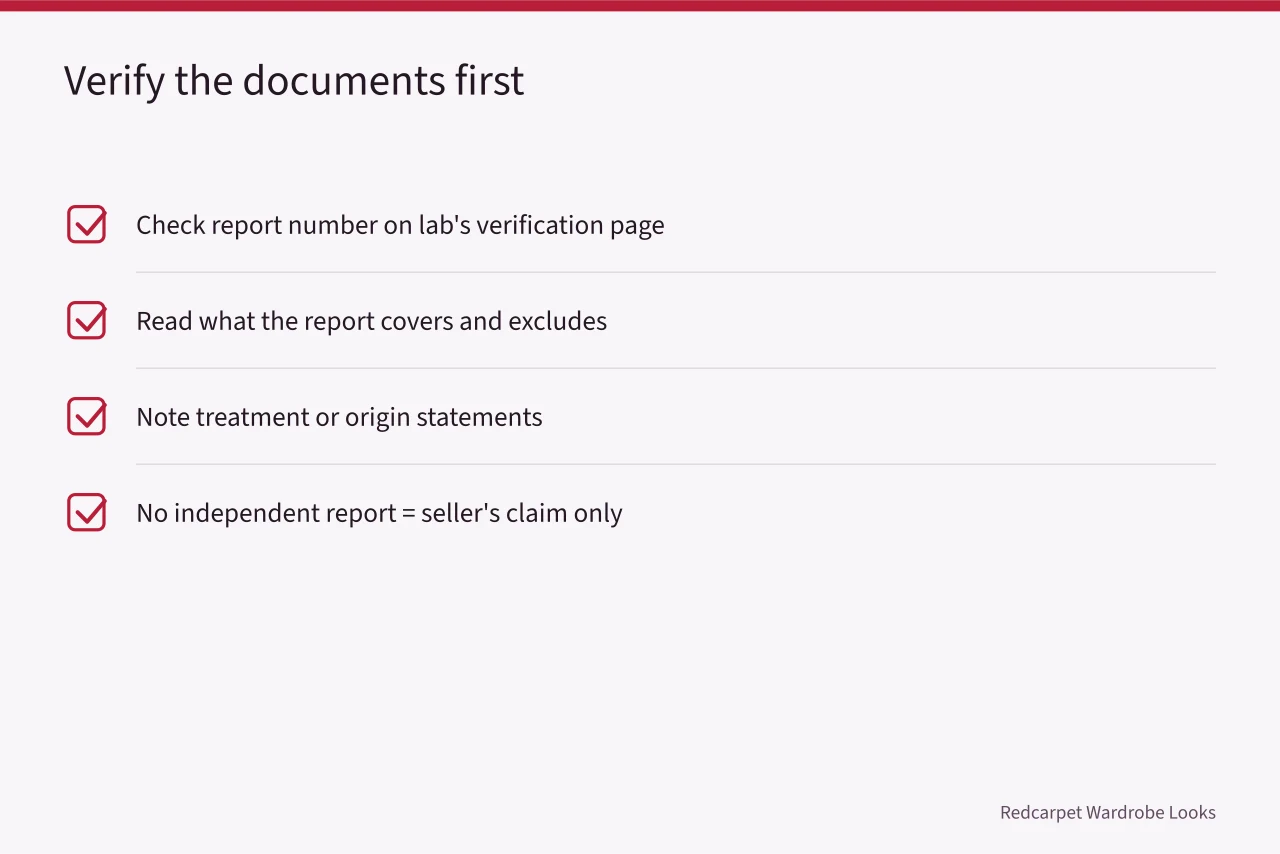
- Take the report number and check it against the issuing laboratory's own verification page. A report from a recognized laboratory exists in that laboratory's records, and the page shows what it says.
- Read what the report does and does not cover. Reports describe a stone; they are not valuations and they do not cover the setting.
- Note whether treatment or laboratory origin is stated, and where it is stated.
- If there is no report from an independent laboratory, treat everything the seller says about the stone as a claim rather than a fact.
The body most often named in this context is the Gemological Institute of America, which publishes its own explanation of the factors a diamond is graded on. Other laboratories exist and grade to their own standards, which is exactly why the issuing laboratory, not the seller, is the place to check.
Step two: the ten-minute bench inspection
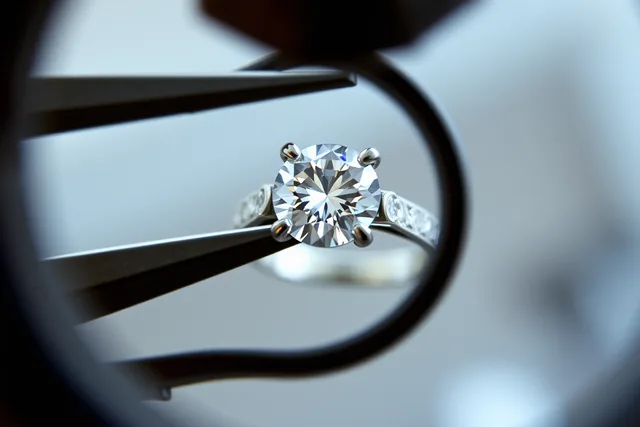
Ask for this in a shop or pay a jeweler for it on a private sale. Every item is observable and none of it requires you to be an expert.
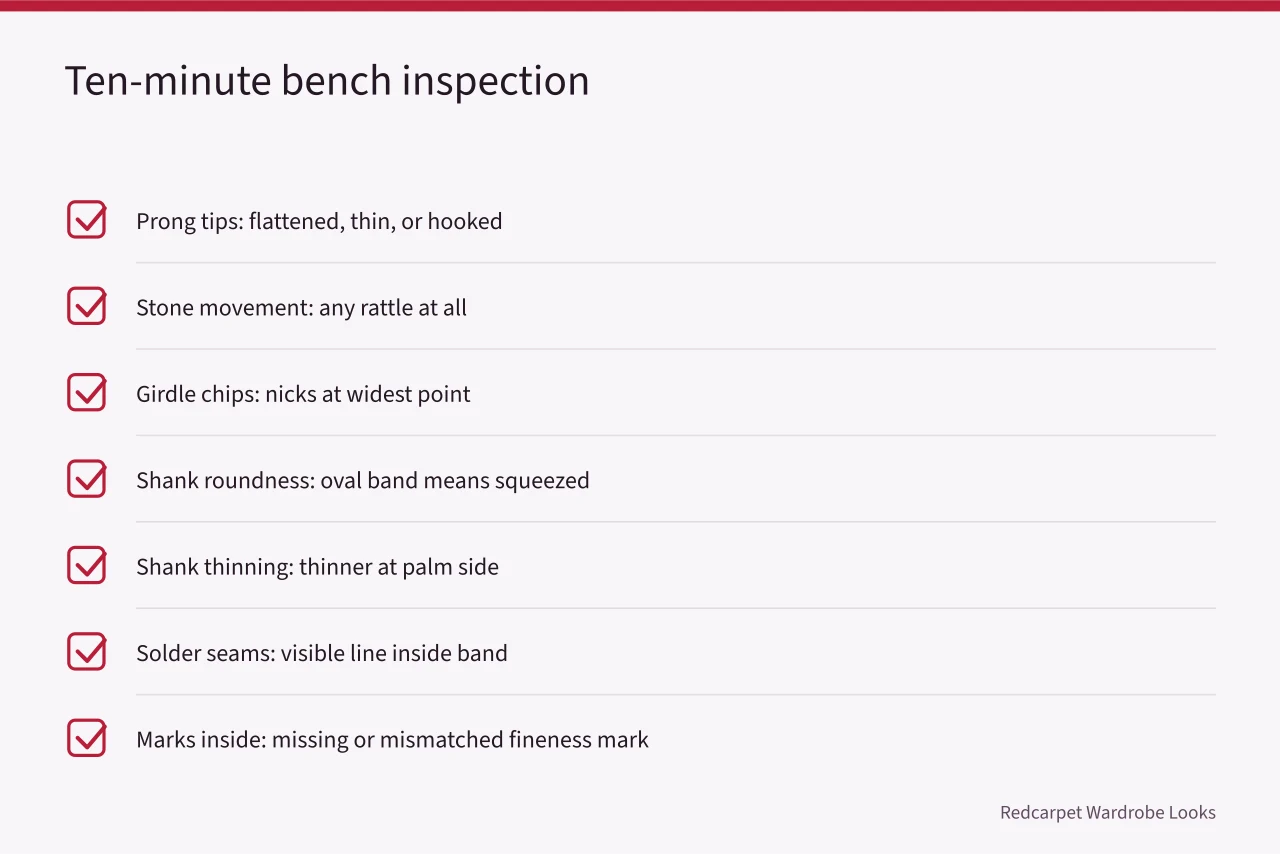
| Check | How | What a bad result looks like |
|---|---|---|
| Prong tips | Under a loupe, look at each tip | Flattened, thin, or hooked over rather than sitting on the stone |
| Stone movement | The jeweler taps the setting near your ear | Any rattle at all |
| Girdle chips | Rotate the stone under magnification | Nicks at the widest point, which is where knocks land |
| Shank roundness | Roll it on a flat surface | An oval band, meaning it has been squeezed over years |
| Shank thinning | Compare the palm side to the top | A noticeably thinner section at the bottom |
| Solder seams | Look inside the band | A visible line, which tells you it has been sized before |
| Marks inside | Loupe the inner surface | No fineness mark at all, or a mark that does not match what you were told |
| Plating wear | Look at the underside of a white metal ring | A warmer color showing through, meaning it needs replating |
| Small stone security | Push gently on a pavé field with a wooden point | Any give, which means beads are worn |
Write down what you find. A written inspection is what makes two rings comparable, and it is the same discipline as the garment checks in the pre-purchase list.
Step three: the appraisal
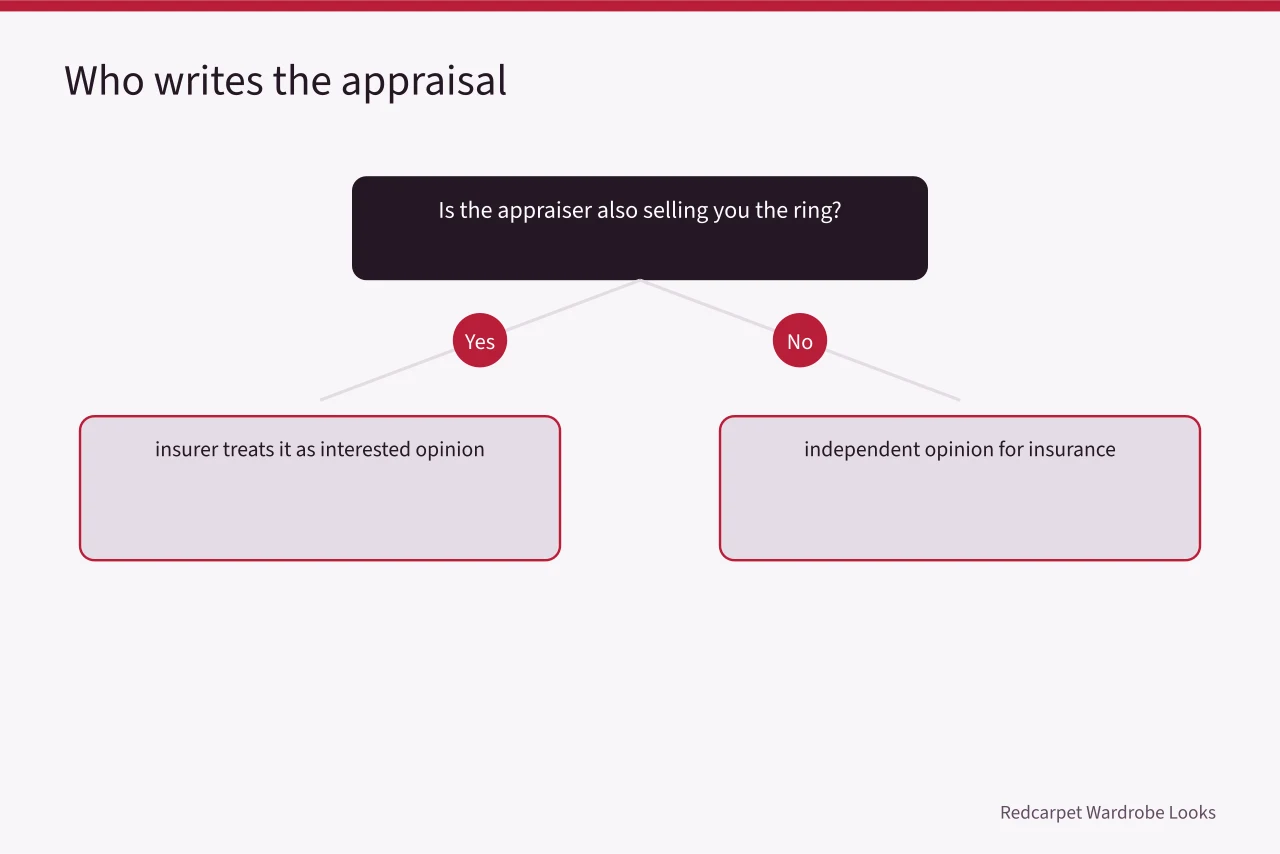
An appraisal is an opinion about value, written for a purpose. For insurance you want one from someone who is not selling you the ring, because an insurer will treat a seller's document as an interested opinion. Ask what the appraiser's qualification is, what the valuation basis is, and how often it should be refreshed.
Two things an appraisal does not do. It does not grade a stone, which is a laboratory's job. And it does not tell you whether you paid a sensible price, since the appraised figure is usually a replacement estimate rather than what anyone would pay you.
Step four: what you can honestly conclude
- That the paperwork exists and matches the object, or that it does not.
- That the construction is sound today, and what it will need in the next few years.
- That the ring can or cannot be resized, and by whom.
- That the seller answered plainly or did not, which is genuinely useful information.
You cannot conclude whether it is worth the price. In this trade, channel, margin and negotiation set price, and no inspection reveals it.
That argues for spending on construction rather than the story, as where the money goes explains at length. The design's service needs, covered in what each setting demands, belong in the same conversation.
Common questions
Can I do this inspection myself?
Most of it, with a loupe and patience. The tap test and the pavé test are better done by someone who has done them a thousand times, and a bench jeweler will usually do a quick check for a small fee.
Is a report from any laboratory as good as another?
No. Laboratories differ in strictness and in what they report. Look up the issuing laboratory before you weigh its document, and be careful with a report from a body whose name closely resembles a better-known one.
Should I review a seller publicly?
Describe what happened rather than rating the person: what was promised, what was documented, and how a problem was handled. That is more useful to the next buyer, and it is the same standard applied to practitioners in judging the work.
How often should a ring be re-inspected?
Whenever it is cleaned professionally, which for a ring worn daily is a small number of times a year. Loose settings are cheap to fix and expensive to ignore, as the pillar on rings sets out.