Industry
Part of Street style: ideas, options and buying details
How to choose street style: what to know and why
How to choose street style in five steps: write the constraints, pick a silhouette and a palette, choose a system of layers, then buy slowly and test it.
Choosing a way of dressing for ordinary days is a design problem with constraints, and the constraints are more useful than the inspiration. Climate, commute, ground, laundry, and the fact that you will be moving decide most of the answer before taste enters. This page is a method for making the decision in that order, and for using street photographs as references without buying the photographs.
What to take away
- Start from constraints: weather, distance walked, surfaces, how often you wash. They eliminate most options and the rest is choice.
- Pick a silhouette that reads at distance and in motion, then a small palette, then a set of pieces that all combine. In that order.
- Use street photographs to extract proportion and fabric behavior, never to identify products.
Step one: write down the constraints
| Constraint | The question | What it rules out |
|---|---|---|
| Climate | How many months are wet, cold, or hot | Fabrics and layers that only work in one season |
| Commute | How far you walk, on what, in what light | Shoes, hems and fabrics that fail on the route |
| Ground | Pavement, gravel, stairs, wet floors | Heel heights and hems |
| Laundry | How often you can wash, and whether you will dry clean | Anything that needs care you will not give |
| Movement | Cycling, carrying, sitting for hours, standing for hours | Cuts that cling, ride, crease, or restrict |
| Occasions | The range from the most to the least formal day | A style with no answer at either end |
Ten minutes with this table does more than a year of saved photographs. Most people discover that their constraints already exclude half of what they had been considering, and that the half remaining is where their actual style lives.
Step two: choose the silhouette
Outdoors, at distance, in motion, a body reads as a shape before it reads as anything else. Decide the shape.
- Where the volume sits: shoulder, hip, hem, or nowhere.
- Where the waist is, or whether there is one.
- The length of the top layer against the leg.
- The width of the leg against the shoe.
That is four decisions, and together they are a silhouette. Test the candidate by photographing yourself from across a street and looking at the result small, because the outdoor picture is a test of exactly these four things and nothing else.
Change the silhouette rarely. Everything bought afterwards is bought to serve it.
Step three: choose the palette
Three to five colors that all combine, chosen against two things: what sits well next to your face, which is the warm or cool question, and what reads against the places you spend time. Gray clothes on gray streets vanish. One strong color in the set does the work of ten prints, and it is the one that survives a distance photograph.
Palette is also what makes a small wardrobe work. When every top combines with every bottom, the number of outfits is the product of the two counts, and a capsule wardrobe is nothing more than that arithmetic taken seriously.
Step four: choose the system of layers
Weather changes during a day. A style that only exists at one temperature is a style you will not wear. Layered clothing is the answer, and the design question is which layer comes off first and where it goes when it does. Decide that the outer layer is part of the silhouette, not an interruption of it, because in most climates the outer layer is what is photographed most of the year.
Step five: buy slowly and test
- Buy the silhouette first: the pieces that fix where volume and length sit. Usually a coat, a trouser or skirt shape, and a shoe.
- Test each before buying more, using the wear tests: distance photograph, walk, sit, weather, wash.
- Add the palette pieces next, checking each against everything already owned.
- Add one distinctive element at a time, and only one at a time in an outfit. Distance rewards a single large gesture.
- Run any purchase past the nine outdoor mistakes as a final check.
Using references without copying them
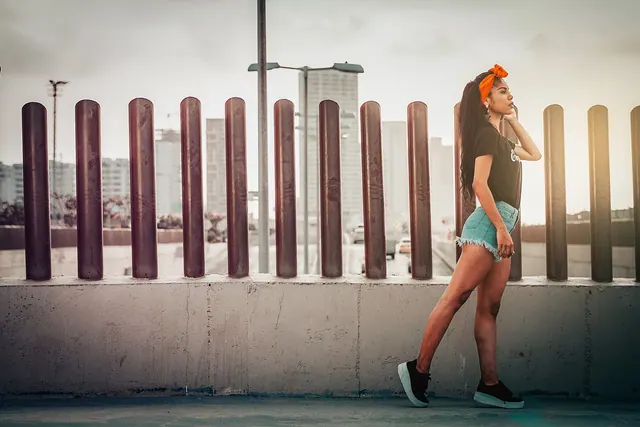
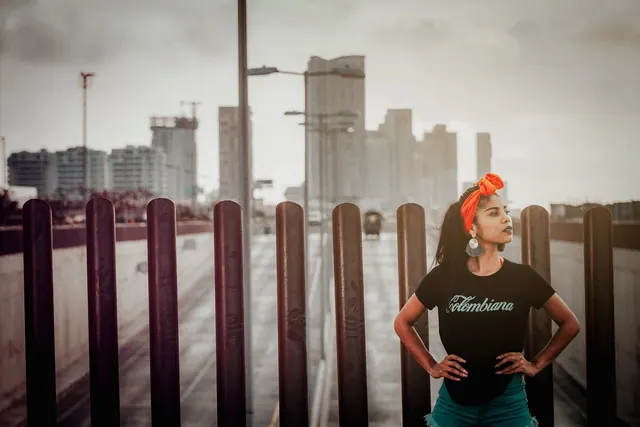
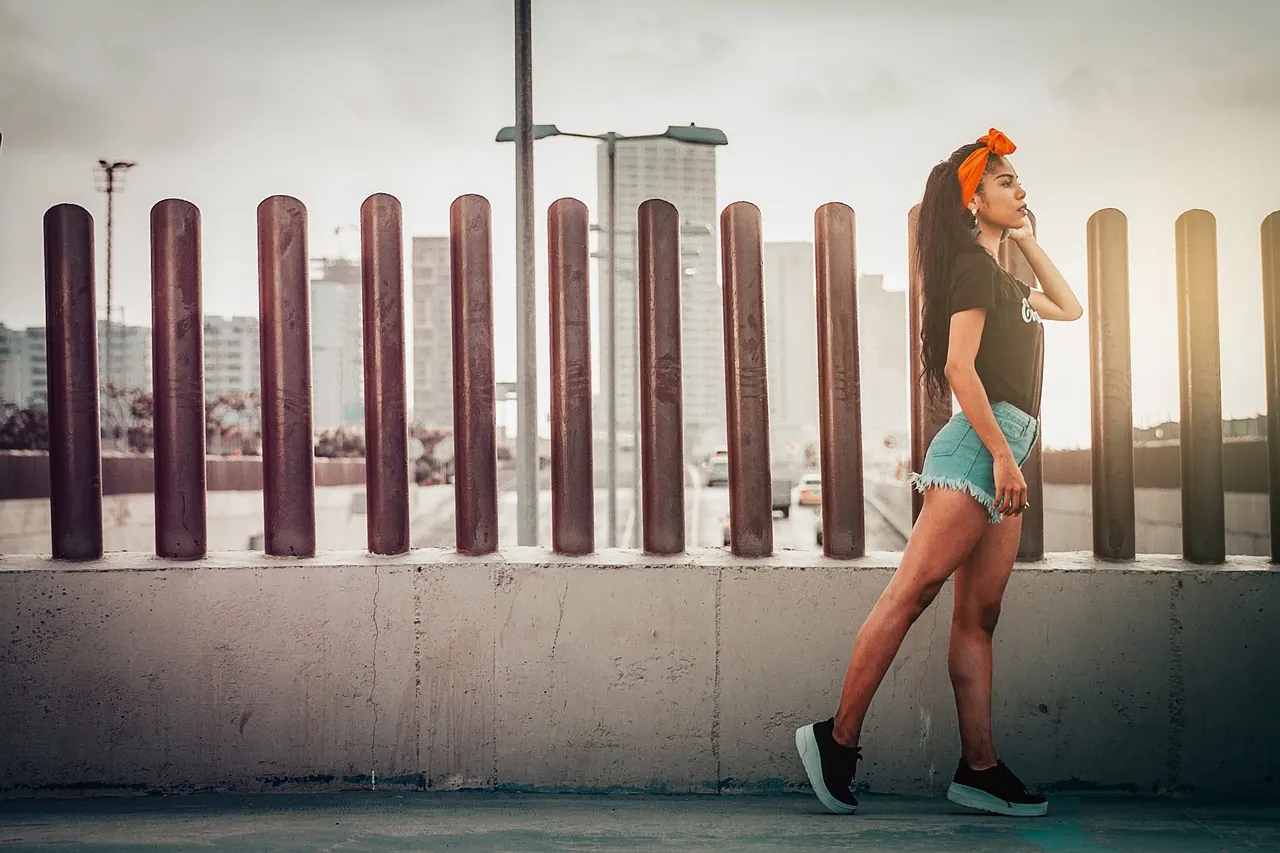
A street photograph is useful for three things: the proportion of the silhouette, how a fabric moved when the frame was taken, and how a color read against that background at that hour. Extract those three and write them down in words. A long straight coat over a wide trouser, heavy matte cloth, one strong color at the top: that is a reference that can be shopped anywhere. The garment in the picture, by contrast, was probably lent, may not be for sale, and the row of tiles under it is a sales channel matching by resemblance.
If the proportion belongs to a period, the decade it comes from will show you the same line on dozens of bodies, which is a better guide to whether it will work on yours than a single photograph of a single person on a good day.
Common questions
How many pieces does a working style need?
Enough that every top combines with every bottom and the laundry cycle is covered. For most people that is fewer than they own and more than a capsule purist suggests. Count what you actually wear in a fortnight; that number is your wardrobe.
Should the style change with fashion?
The silhouette should change rarely, on purpose. The palette can shift by a color. The distinctive element can change every season without disturbing anything else.
What if my constraints and my taste disagree?
Constraints win on ordinary days, and taste gets the days that are not ordinary. A style built for the commute and broken deliberately at the weekend is a style; one that ignores the commute is a costume.
How do I know it is working?
Photograph yourself across a street once a month. If the silhouette reads, the color holds, and you did not have to adjust anything before the picture, it is working.