Maintenance
Part of Where the money sits: an engagement ring purchase, broken down
Dating an engagement ring from cut, marks, and wear alone
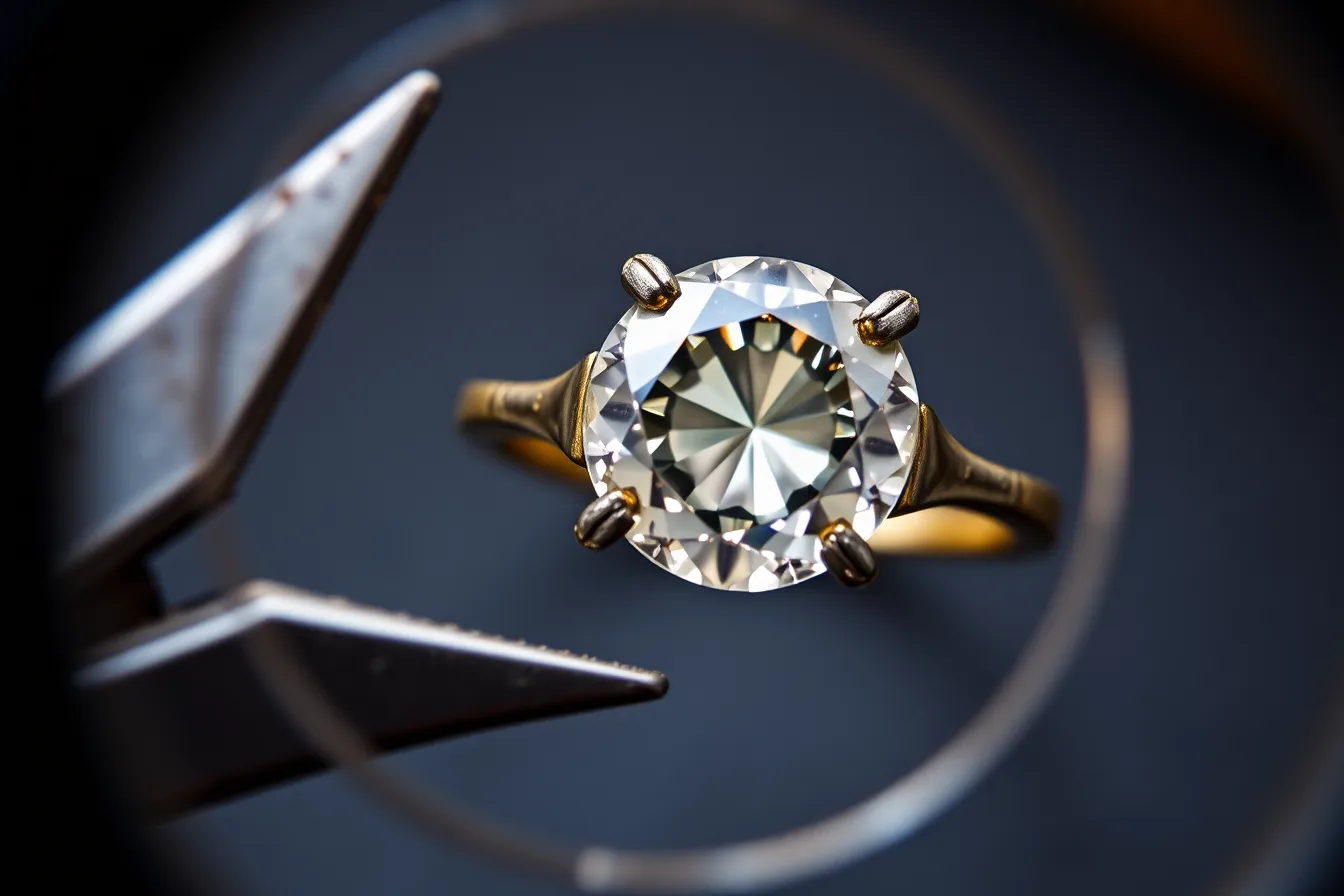
Twenty engagement rings examples of dating a ring from the object itself: cut styles, marks, setting methods and wear patterns that place a piece in a period.
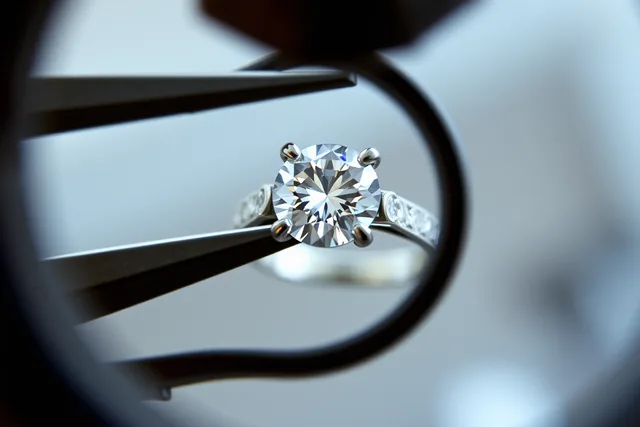
An old ring carries its own date in its construction. Cutting styles changed as the tools changed, marks were required in some places and not others, and the way metal was joined leaves evidence that survives a century of wear. None of this needs a document. It needs a loupe, good light, and knowing which twenty things to look at.
What to take away
- Cut style is the strongest single clue, because it follows the tools available rather than taste.
- Marks are a second, independent line of evidence, and they only exist where a jurisdiction required them.
- Evidence places a piece in a range, never on a year. Anyone naming a year from an object alone is guessing.
Twenty observations and what each suggests
| # | What you see | What it points to |
|---|---|---|
| 1 | A stone with a large flat facet on top and a small, chunky facet count | Early hand cutting, before mechanical bruting |
| 2 | A visibly open flat area at the very bottom of the stone | An older cut, where the point was left blunt |
| 3 | A stone with an irregular outline, slightly off round | Hand shaping rather than a machine-turned girdle |
| 4 | Very precise, repeating facet geometry | Modern cutting, or a recut of an older stone |
| 5 | A closed metal back behind the stone | An old technique, often used with foil beneath |
| 6 | Traces of foil or a dark backing behind a stone | A method used to boost color before bright electric light existed |
| 7 | Silver over gold in the same ring | An older approach: white metal at the front for color, gold behind for strength |
| 8 | A ring entirely in a white alloy | A later material, since white alloys came into wide jewelry use in the twentieth century |
| 9 | Hand-cut, slightly uneven prongs | Bench work rather than a cast setting |
| 10 | Prongs of identical shape with a soft, slightly rounded surface | Casting, and a later production method |
| 11 | Fine pierced work behind the setting | A style of openwork associated with early twentieth-century pieces |
| 12 | Engraved detail along the shoulders, worn shallow | Hand engraving, and long wear |
| 13 | A solder line inside the band | The ring has been sized at least once |
| 14 | A band noticeably thinner at the palm side | Decades of wear, not a manufacturing choice |
| 15 | A hallmark struck inside the shank | A jurisdiction that required assay, and a set of symbols that can be looked up |
| 16 | A single number such as a fineness figure and nothing else | A jurisdiction with no compulsory assay, so the mark is a maker's claim |
| 17 | A worn, partially struck mark | An older piece, since marks wear from the inside surface outward |
| 18 | A modern laser inscription on the stone's girdle | A recent laboratory report exists for it |
| 19 | Machine-perfect small stones, all identical | Later manufacture; earlier small stones vary noticeably |
| 20 | A stone that fluoresces oddly or shows curved growth lines | A material question rather than a date question, and one for a laboratory |
How to combine the evidence
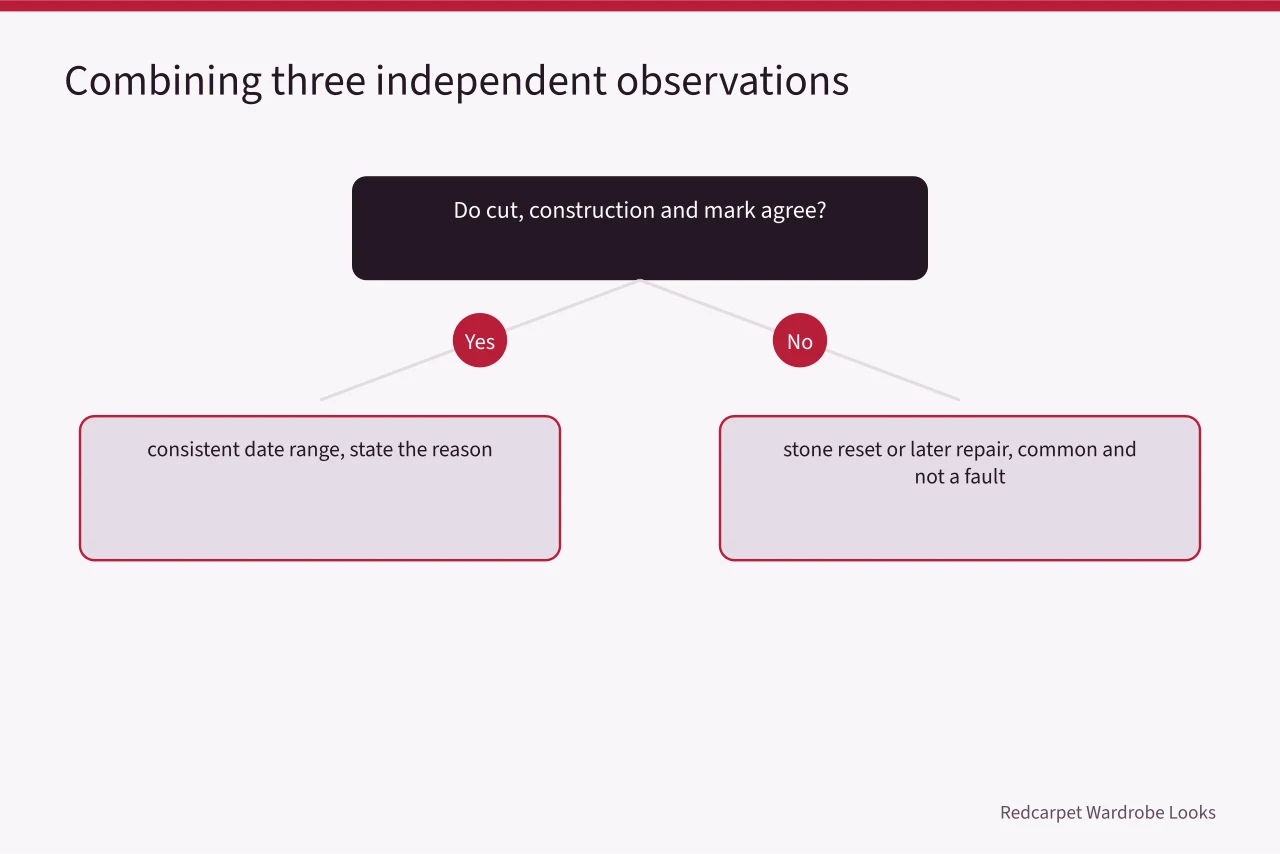
Take three observations from different families and see whether they agree. A cut style, a construction method and a mark are independent, so agreement is meaningful and disagreement is informative. A ring with an early cut in a late setting is a stone that was reset, which is extremely common and not a fault.
Where marks are involved, the symbols themselves are the reference. In the United Kingdom the assay system and what each symbol means are set out in the government's hallmarking guidance notes. Other countries run their own systems, and many run none, so an absent mark says something about where a piece was made rather than about whether it is real.
What the object cannot tell you
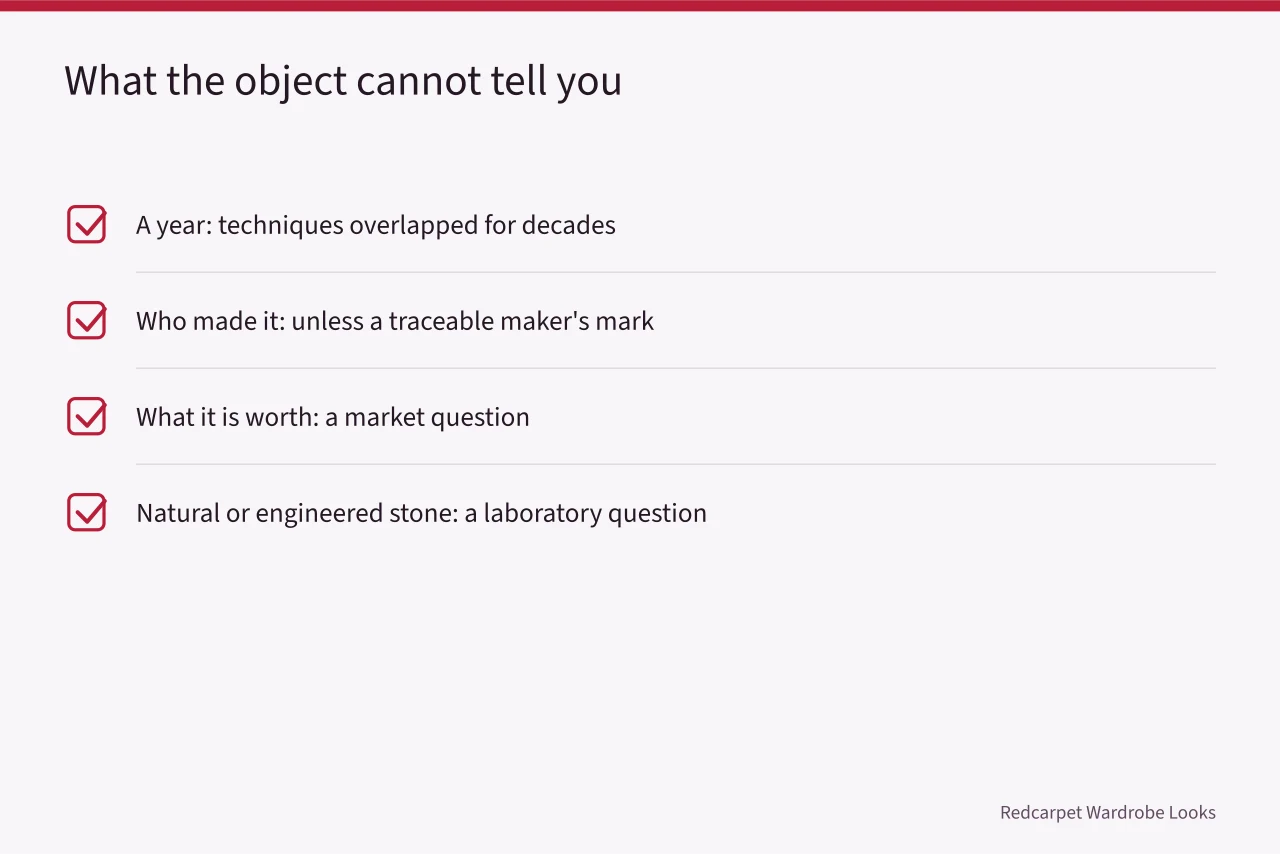
- A year. Techniques overlapped for decades and revivals copied earlier styles deliberately.
- Who made it, unless there is a maker's mark that can be traced.
- What it is worth, which is a market question and not an object question.
- Whether a stone is natural or engineered. Some engineered materials are old enough to appear in old settings, and that is a laboratory question, as the inspection sequence explains.
Treat every conclusion as a range with a reason attached. "Probably before the 1920s, because the cut is hand-shaped and the back is closed" is a proper statement. "An 1890s ring" is not, unless a document says so.
Using this when buying secondhand
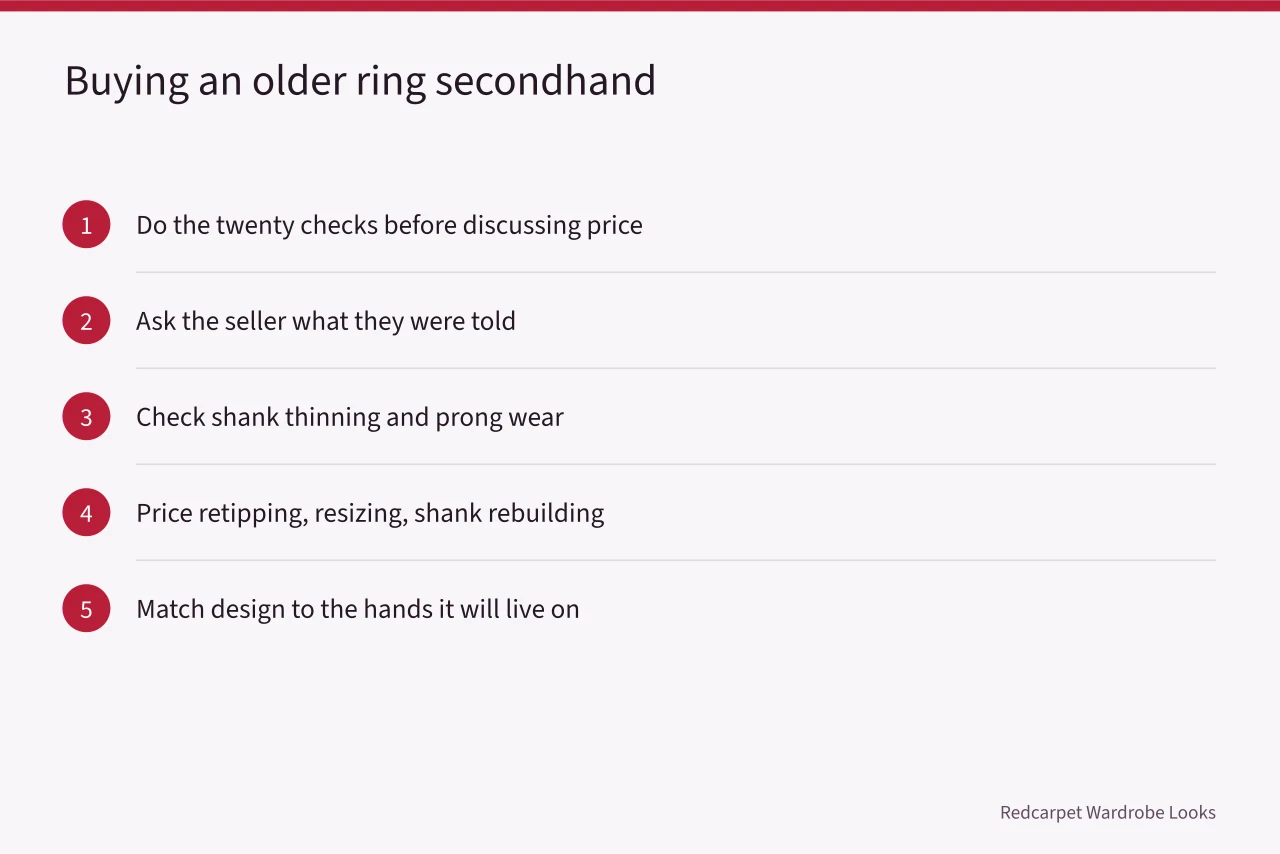
- Do the twenty checks before discussing price, so the conversation starts from the object.
- Ask the seller what they were told and by whom, then treat that as a claim rather than a finding.
- Check the shank for thinning and the prongs for wear, since an older ring's real cost is the restoration it needs.
- Price the restoration before buying. Retipping, resizing and rebuilding a worn shank are all normal and all chargeable.
- Match the design to the hands it will live on, using the constraint list in choosing a ring together.
An older piece bought well is frequently better value than a new one, for the reasons set out under spending where it counts. The general skill of reading metal, marks and construction extends beyond rings, and it sits in the pillar on pieces and their evidence alongside the wider account in the rings pillar.
Common questions
Do I need a loupe?
A basic one is enough for most of the twenty. Marks and facet edges are the two places where magnification changes what you can see at all.
Is a resized ring worth less?
Not usually, and it is normal. It matters only where originality is the whole point, which is a collector's concern rather than a wearer's.
What if there is no mark at all?
That is common and not suspicious by itself. Many countries never required assay. Test the metal rather than the mark, which a jeweler can do quickly.
Can a modern ring be made to look old?
Yes, deliberately and legitimately, and reproduction styles are widely sold. The evidence usually separates them: casting texture, machine-perfect small stones and modern alloys are hard to fake convincingly at the same time.