Features
Part of Jewelry and watch buying starts with a guide to checking construction
Jewelry or a watch: measuring drop and chain length before you buy in 2027
Jewelry and watches ideas 2027 built from measurements: matching drop and chain length to a neckline, and the fastenings that decide whether a piece comes home.
Most advice about wearing jewelry is taste dressed as rule. Two parts of it are not. Proportion can be measured with a tape, and security can be checked with your fingers. Get those two right and the taste question becomes small, because only a handful of options will be left.
What to take away
- Measure the neckline before choosing a chain length. The relationship between the two is the whole decision, and it takes a minute to settle.
- Earring drop is limited by the jaw and by weight, not by fashion. A heavy drop worn often damages the earlobe over time.
- Every piece you wear out has a way of coming off. Check the fastening before the mirror, not after.
Proportion you can measure
A necklace works or fails on where it lands relative to the neckline and the collarbone, and that is a measurement rather than an opinion.
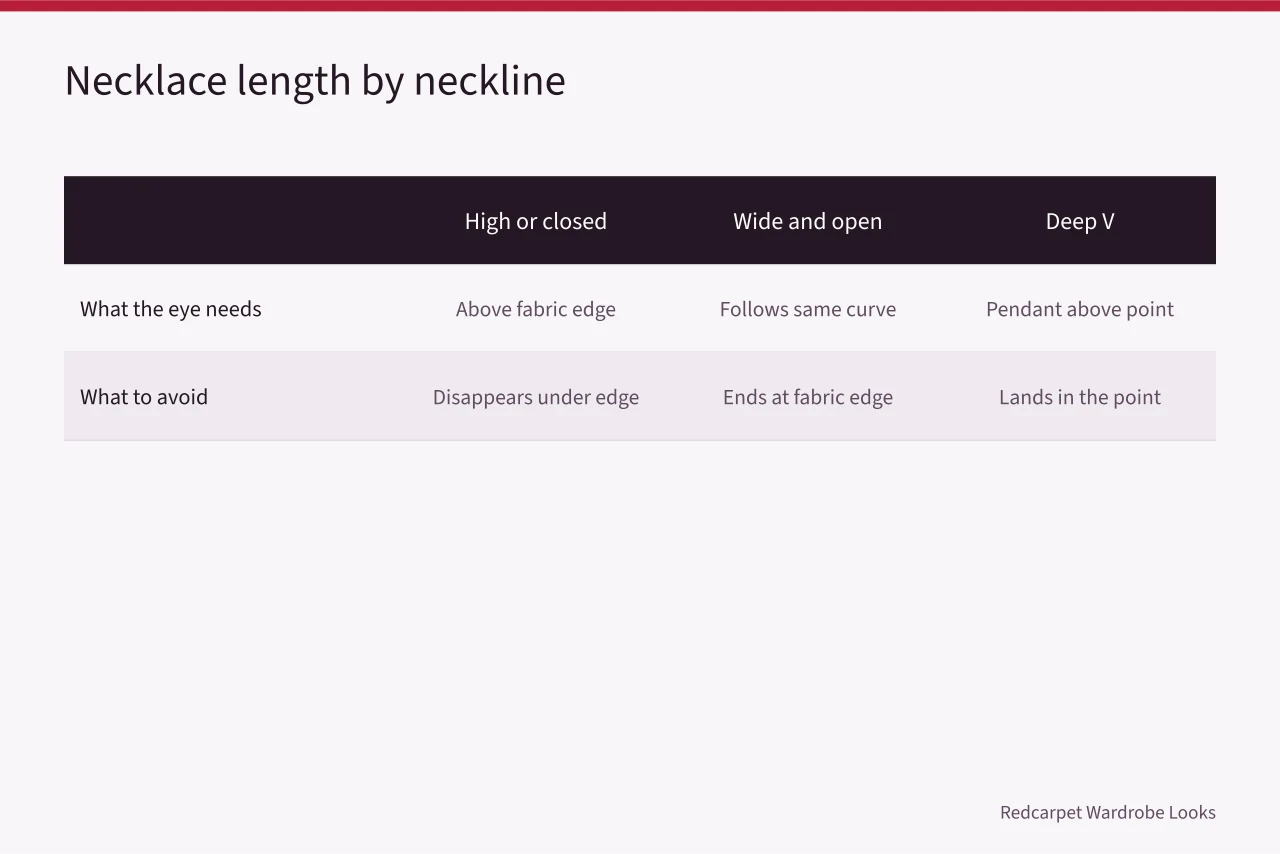
| Neckline | What the eye needs | What to avoid |
|---|---|---|
| High or closed | A piece that sits above the fabric edge, or nothing at all | A chain that disappears under the edge and reappears |
| Wide and open | A piece that follows the same curve, sitting inside it | A length that ends exactly at the fabric edge |
| Deep V | A pendant that stops well above the point | Anything that lands in the point and draws attention to it |
| Strapless | Either close to the throat, or a long single line | Mid-lengths, which have nothing to relate to |
| Collared or lapelled | A short piece inside the collar, or a long one over it | A length that fights the lapel line |
Take a tape, put it round your neck, and note the length at which a pendant lands where you want it. That number is what you shop with. It is the same trick as knowing your hem length: a measurement removes the guesswork that a mirror keeps reintroducing.
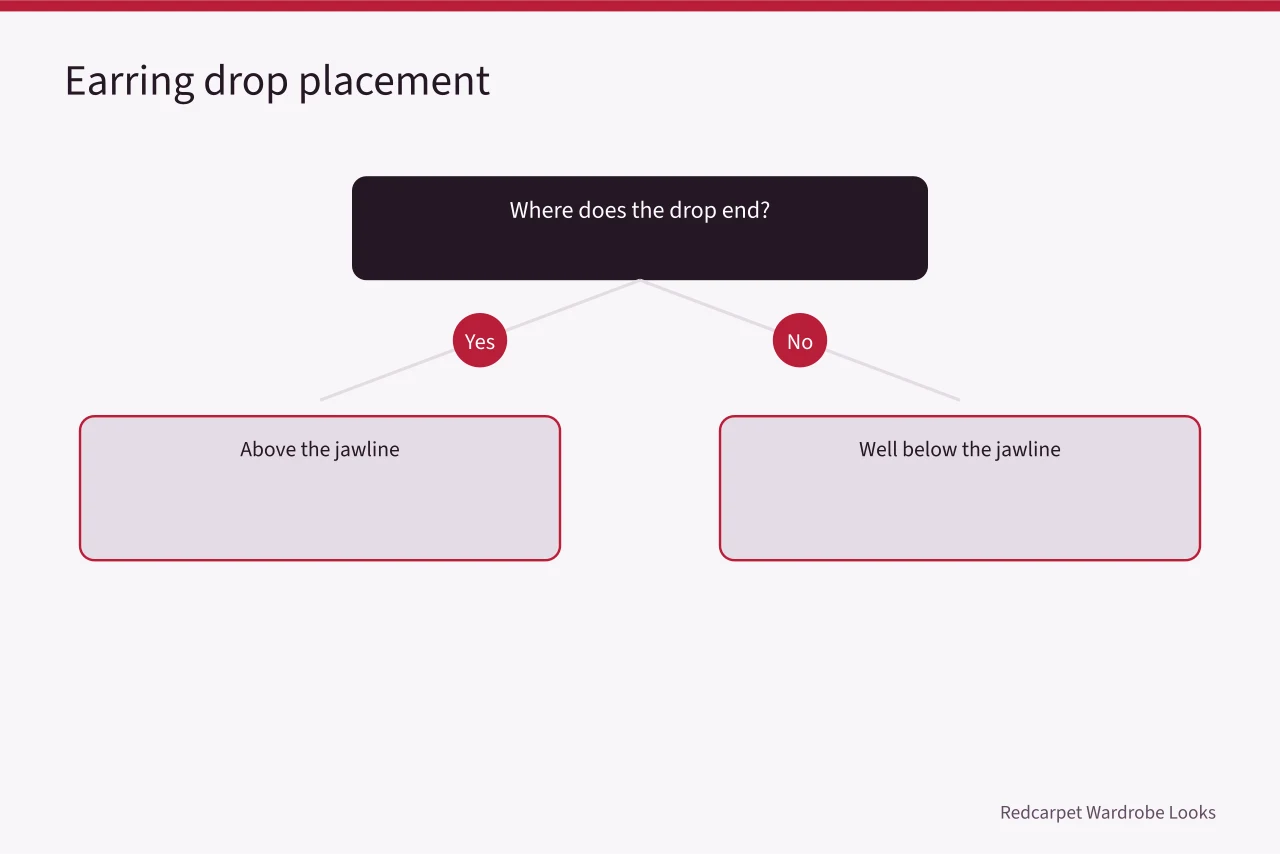
Earrings follow a shorter rule. The drop should end above the jawline or well below it, not level with it, because level with the jaw puts two horizontal lines in the same place. Weight matters more than length: anything heavy enough to feel like weight after an hour is heavy enough to stretch a piercing over years.
Building a set instead of collecting pieces
- Choose one piece to carry the look and let the others be quiet. Two competing focal points read as indecision at any distance.
- Keep the metal consistent near the face, then relax the rule further down the body where nobody compares them directly.
- Match scale to the room. A fine chain vanishes at conversational distance, let alone in a photograph, which the pillar on reading a piece sets out under scale.
- Decide the watch's role. Worn with a formal look it is either part of the set or a tool you are wearing anyway. Both are fine; the mistake is treating it as invisible.
- Try the whole set together, with the actual garment, before the day. Necklaces catch on beading, and earring backs catch on hair and on collars.
Fastenings, and why pieces get lost
Look at the closure before anything else. It is where cost is saved and where the loss happens.
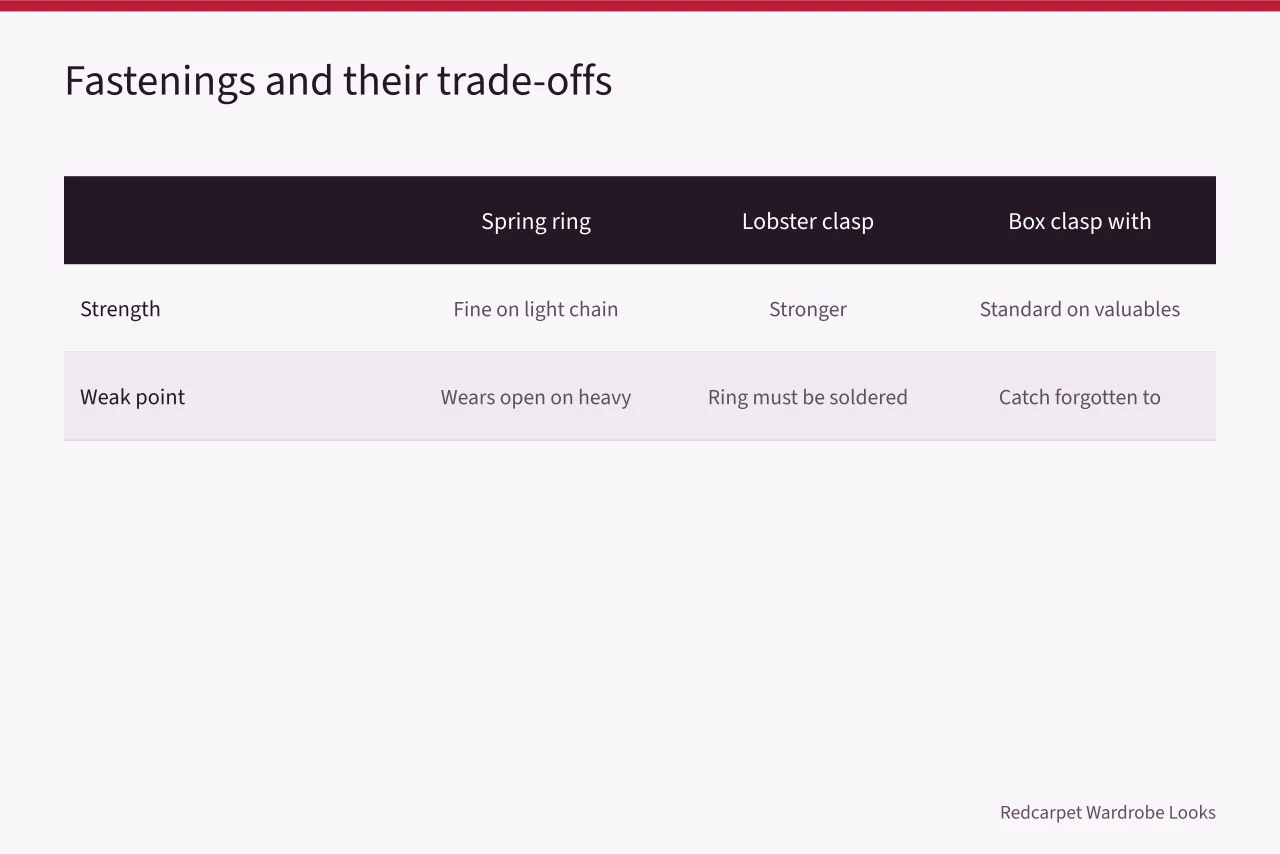
- A spring ring closes with a small lever and a spring. It is cheap, it is fine on a light chain, and it wears open on a heavy one.
- A lobster clasp is stronger and easier to work with cold fingers. Check that the ring it closes onto is soldered shut.
- A box clasp with a safety catch is the standard on anything valuable, and the catch is the part people forget to close.
- A screw back holds an earring more securely than a friction back, and a friction back with a rubber sleeve sits between the two.
- A safety chain on a bracelet is not decoration. On anything you would be upset to lose, it is the cheapest insurance available.
Test any clasp by pulling gently on both sides before you leave. If a clasp opens under a light pull, it will open on a coat sleeve.
Metal against skin
Reactions to jewelry are common and are usually a contact reaction to an alloying metal rather than to the precious metal itself. The general condition is described by the American Academy of Dermatology under contact dermatitis, and anything persistent is a question for a clinician rather than for a jeweler.
Practically, two things help: ask what the alloy contains, and remember that a plated finish wears through to whatever is underneath. A piece that was comfortable for a year can stop being comfortable.
Wearing something valuable out
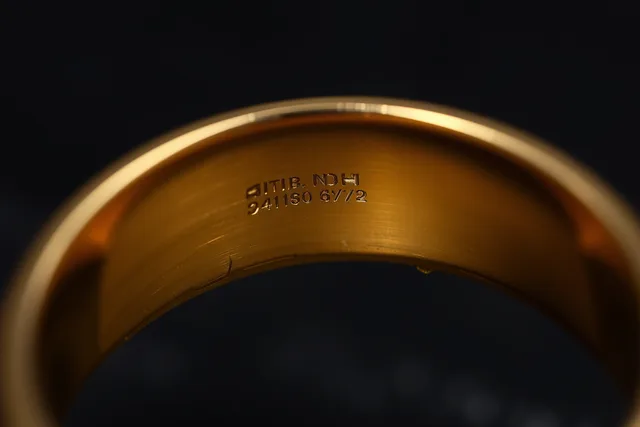
- Photograph everything before you leave, including the marks inside, so a description exists if it is needed.
- Confirm the piece is covered by a policy while it is out of the house. Many policies treat that differently from at home.
- Put earring backs and a small pouch in a bag. Losses happen when something is taken off and put down.
- If a piece is borrowed, the terms are somebody else's and the responsibility is usually yours while it is out, which is the arrangement described under how loans work at events.
- Take it off for anything physical. That is not fussiness; it is the difference between wear and damage.
The same rehearsal logic applies to a whole look, since a piece that catches on a garment is only discovered when both are worn together, which the pre-purchase checks and the ceremony pillar both push you toward doing early.
Common questions
How do I choose a chain length without trying it on?
Measure with a tape at the length you want the pendant to land, then buy that number. Sellers list lengths in centimeters or inches, and the measurement removes most of the risk of an online purchase.
Are heavy earrings really a problem?
Over years, yes, for the piercing. The practical answer is to keep heavy drops for occasions and wear light pieces daily, rather than to avoid them.
Can I mix metals?
Yes, and it is easiest to do deliberately: one dominant metal with a second appearing more than once, so it reads as a decision. Near the face, keep it simpler.
Does the watch have to match the jewelry?
No. It has to not argue with it. A working tool can stay a tool. If the watch is part of the look, treat it as the second piece rather than as a third focal point, and check the same construction points you would on anything else.