Features
How Toronto's Film Festival Red Carpet Differs from US Award Shows
How Toronto's film festival red carpet actually works: dress codes, September weather, sponsor rules, Ontario HST, and cross-border duty on borrowed gowns.
What to take away
- Toronto's film festival carpet is a press and industry event, not a televised awards show, so the dress code usually stops at cocktail or black tie optional.
- The invitation or the accreditation line, not the guest list, sets what you wear to each premiere.
- September weather in Toronto decides coats, shoes, and whether a car waits on King Street West.
- Ontario adds 13 percent HST to retail purchases, a real line item on a Toronto gown.
- Cross-border borrowing raises duty and tax questions that have to be settled before the dress leaves the United States.
The invitation sets the dress code, not the awards calendar
US awards shows build a season-long style story around a broadcast. Toronto does not work that way. Award show style differences start with that structure. The Toronto red carpet dress code is set premiere by premiere, because TIFF is a festival with hundreds of screenings and each venue carries its own attire note.
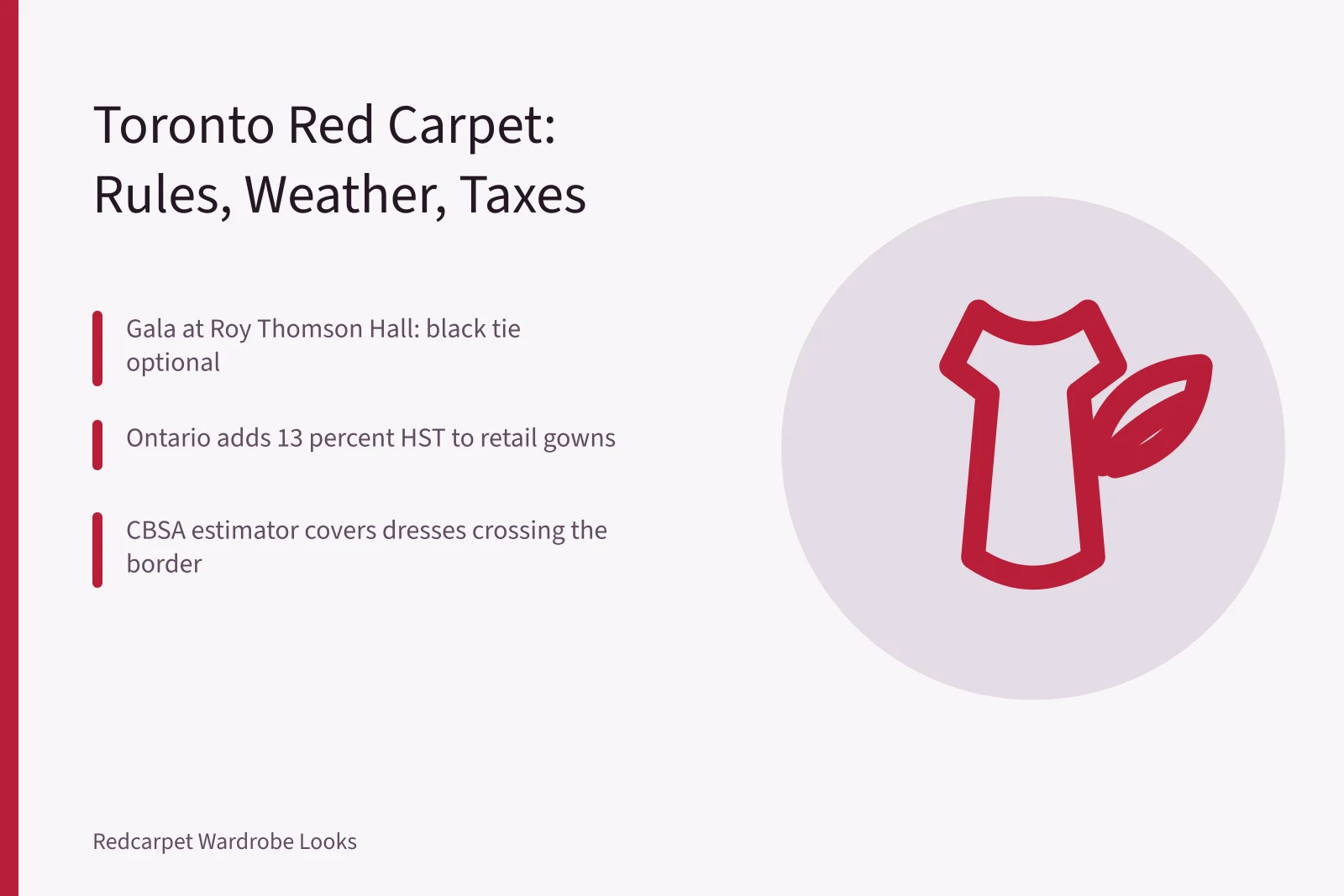
Gala presentations at Roy Thomson Hall tend to specify black tie optional. The Wikipedia entry on black tie sets out what that requires: a dinner jacket, matching trousers, and a formal shirt. A floor-length dress or a tuxedo both read correctly there.
Premieres at TIFF Lightbox and the Princess of Wales Theatre usually say cocktail instead. That means a shorter dress, a heel you can stand in, and a clutch rather than a tote.
September weather rewrites the plan
Festival week falls in early September. Evenings can start warm and turn cool and wet inside the same carpet window. Arrivals at Roy Thomson Hall happen outdoors under tents, with a short walk from the curb.
That changes what you wear and what you carry. A structured coat over a gown, a spare flat shoe in the car, and a compact umbrella are normal here. They are not normal at a Los Angeles awards show in March.
Check the forecast before you lock the look. Environment Canada publishes weather tools and seasonal data for Canadian cities, and the first two weeks of September can swing hard.
Canadian red carpet rules lean practical. The coat, the shoes, and the ride matter as much as the label.
Sponsor agreements and press placement
Festival carpets run on sponsor agreements. Brand partners often hold category exclusivity, which can restrict visible logos from competing labels in photographs. Ask the publicist handling your arrival which conflicts apply before you wear a rival label.
Press placement is managed too. Outlets get assigned positions along the line, and a Canadian festival usually carries a smaller US entertainment press group than a network awards show. Fewer interviews, shorter walk, same photographs.
Money: HST, duty, and the borrowed dress
Ontario charges 13 percent HST on retail purchases, evening wear included. That number separates Toronto from a no-tax state and softens the gap with a high-tax one.
If the gown stays in the United States, the border question disappears. If it crosses with a stylist or a courier, run the numbers first. The CBSA duty and tax estimator covers clothing brought into Canada, dresses included.
Borrowing is the norm on this carpet. Fewer people own what they wear than the photographs suggest, and a rental from a Canadian showroom avoids the import question because the garment never crosses a border.
Example: a Tuesday premiere at Roy Thomson Hall
Toronto film festival fashion comes down to logistics, so working guests run the same short list:
A Tuesday premiere at Roy Thomson Hall
- Read the attire line on the invitation and match it. Cocktail does not mean a floor-length gown unless the host says so.
- Check the evening forecast, then pack a coat and a flat shoe for the walk from the car.
- Confirm with the publicist whether sponsor exclusivity affects your label.
- Decide whether you are buying, renting, or borrowing, because that choice sets your tax exposure.
- Arrive early. The carpet window is short and the press line moves fast.
How Toronto compares with other carpet cities
What drives the look
- Toronto
- Festival premieres, sponsor contracts, September weather
- Atlanta
- Film and music awards, a deeper stylist pool
- Las Vegas
- Residencies, casino-hosted events
- Los Angeles
- Studio premieres, awards season
Money rules that shape it
- Toronto
- Ontario HST, cross-border duty
- Atlanta
- Georgia incentives, city permits
- Las Vegas
- Nevada tax rules, Strip retail
- Los Angeles
- California sales tax, higher retail
Atlanta built its own version around film and music awards, and the page on Atlanta's rising red carpet explains the tax incentives and stylist pool behind it.
Las Vegas solves a different problem. Residencies and casino-hosted events create year-round demand, and the retail sits on the Strip. The Las Vegas red carpet economy explains why wardrobes there are built for repeat appearances rather than one festival week.
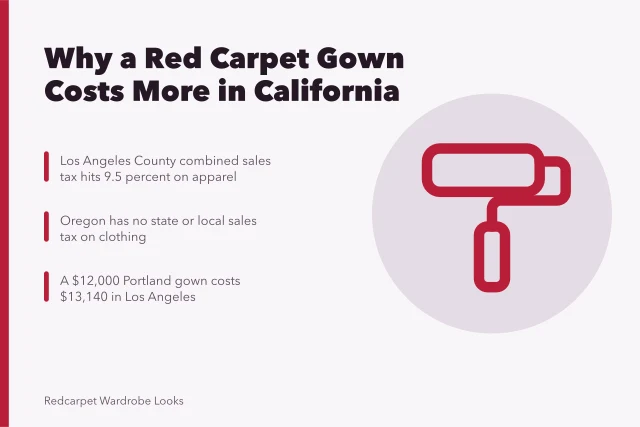
Cost also differs inside the United States. A gown bought in Los Angeles carries California sales tax while Oregon charges none, so California gowns cost more for the same dress.
The real constraint on this carpet is time, not budget. Fittings, the walk, and the light all run on a schedule, which is why the clock drives everything from the tailor to the car.