Features
Red Carpet Foot Pain: What Celebrities Actually Do Before the Carpet
What celebrities actually do before and after the red carpet to prevent foot pain, from breaking in shoes early to the backstage kit and recovery routine.
What to take away
- Red carpet foot pain usually starts with brand new shoes and a rushed fit, not with standing alone.
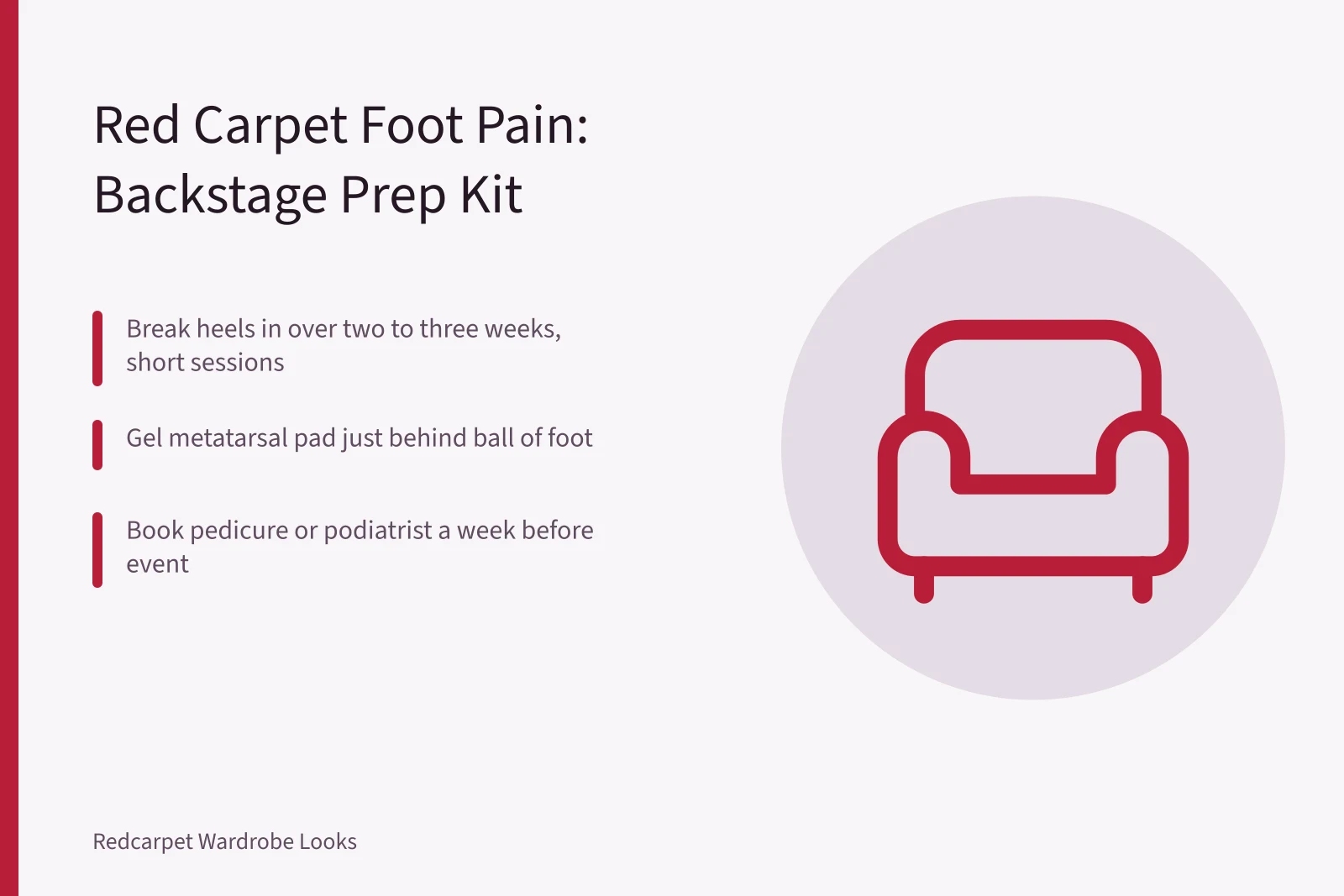
- Break heels in over two to three weeks in short sessions, on carpet and on tile.
- Treat the ball of the foot and the heel counter before you buy inserts.
- Carry a flat backup shoe and a small kit with a handler or in the car.
- Book any pedicure or podiatrist visit at least a week before the event.
The prep calendar matters more than the dress
Stylists start shoe work weeks before the event. The wearer walks a hallway, then a flight of stairs, then a long stretch of carpet. Each pass shows where the shoe rubs.
Foot conditioning runs in parallel. A pedicure clears rough skin that catches on straps. A podiatrist can file calluses and fit padding for a hot spot you already know about.
A shoe that has never met your foot is a wildcard, and a red carpet is the worst place to test one.
Ask about the return policy on borrowed samples too. Some houses lend a single size, and satin does not stretch on the night.
Fit decides where the pressure lands
Shoe construction sets the pressure map. A pointed toe compresses the metatarsals, and a thin heel sends weight forward. The footwear entry on Wikipedia explains how lasts, heels, and uppers change fit.
Heel height also changes how the calf and arch work. The high-heeled footwear article covers the comfort and health side of that tradeoff.
Bring the exact hosiery you plan to wear to every fitting. A thin liner can change fit by half a size, and a strappy sandal behaves nothing like a pump.
Example: the backstage kit a dresser carries
Dressers and handlers keep a small kit near the carpet entrance. It travels with the clutch and the phone, not with the publicist.
Backstage kit a dresser carries
- Hydrocolloid blister patches, cut to the shape of the strap edge.
- Moleskin or felt padding for a stiff heel counter.
- Gel metatarsal pads placed just behind the ball of the foot.
- Foot powder or antiperspirant to cut friction and sweat.
- Silicone heel grips for a shoe that slips at the back.
- A folding flat for the walk back to the car.
Where pain shows up and what helps
Most red carpet foot pain lands in four places. Each has a different cause and a different fix.
| Hot spot | Why it happens | What helps |
|---|---|---|
| Ball of the foot | Thin sole, weight pushed forward | Gel metatarsal pad, lower heel |
| Heel counter | Stiff leather, no break in | Moleskin, heel grip, thicker test sock |
| Toe box | Narrow last, long event | Toe spacers, wider last, shorter wear |
| Ankle strap | Sweat and repeated friction | Powder, silicone strip, looser buckle |
A two week break in routine
Break in works best as a series of short wears rather than one long walk.
Two week break in routine
- Day fourteenwear the shoes indoors for twenty minutes.
- Day tenwalk on carpet and tile for one hour.
- Day sevenwear them with the exact hosiery you plan to use.
- Day fourtest the full outfit, including hem length and clutch.
- Day onekeep them on for thirty minutes, then stop.
After the carpet, recovery starts
Recovery is not an afterthought. Shoes come off as soon as the last photo is taken. Feet go up, and the ankles get gentle movement.
Cold packs help swelling that night. A warm soak the next day helps stiffness. Cover blisters instead of popping them, and see a doctor if one looks infected.
Prop the legs up for twenty minutes and roll the arch over a chilled bottle or a tennis ball.
If you are still choosing the shoe itself, the Red Carpet Shoe Hacks guide covers lasting four hours in heels.
Carpet dress codes run from daytime photocalls to white tie galas. The history and conventions of the red carpet explain why the formality level shapes the shoe.